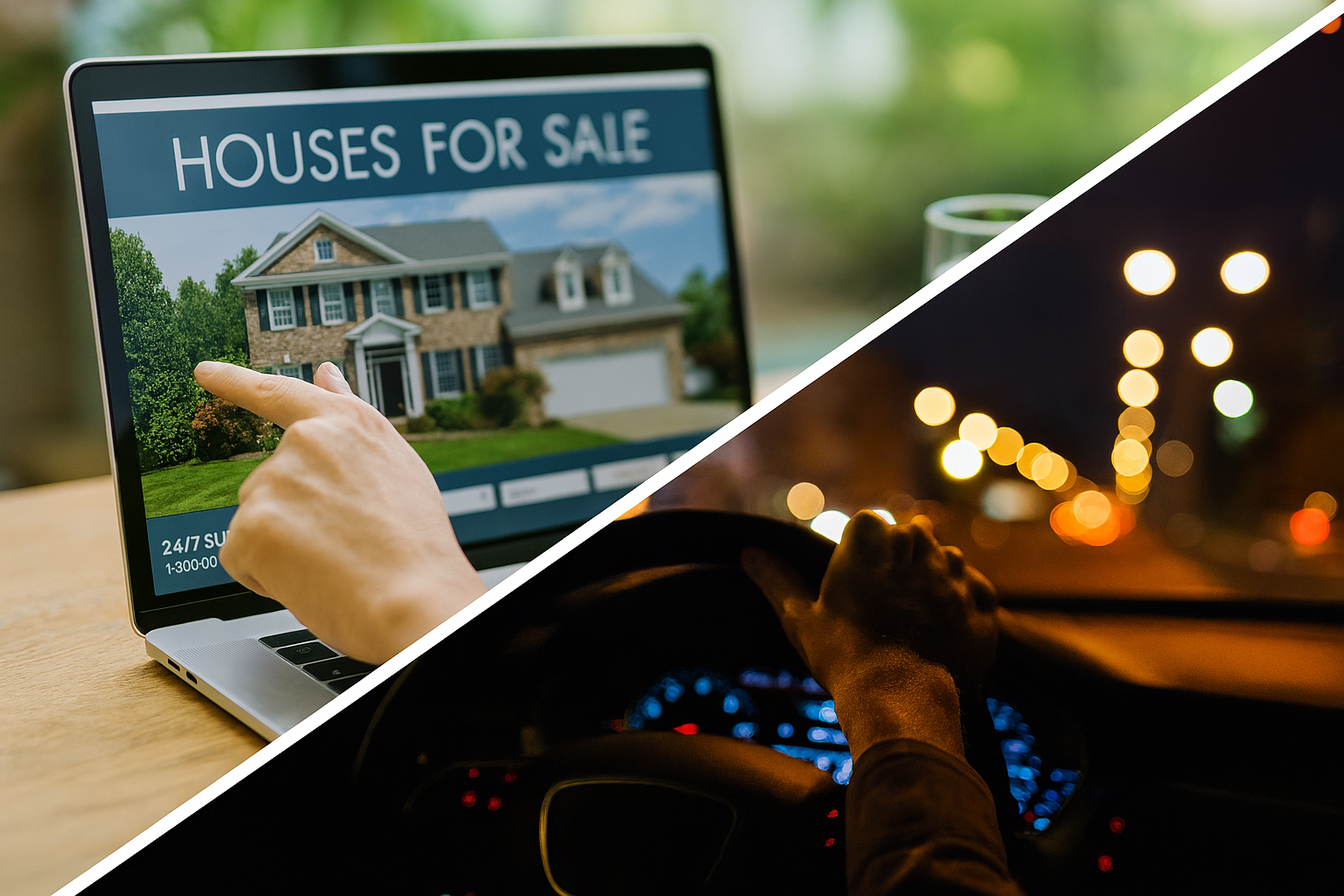
Why Smart Buyers Research Addresses and Drive Neighborhoods at Different Times
Buying a home is one of the most significant decisions most people will ever make. While the property itself often takes center stage, the surrounding area plays an equally important role in determining whether a home is truly the right fit. A house may look perfect on paper, but its location and environment can dramatically influence your daily life. That’s why savvy buyers go beyond the listing and take extra steps to research addresses online and explore neighborhoods in person at different times of the day.
Here’s why these two strategies are essential for making an informed purchase.
Online Research: More Than Just a Map
Looking up an address online is about more than pinpointing where a home sits on a map. It’s an opportunity to uncover valuable insights about the neighborhood, amenities, and potential challenges.
-
- Nearby Amenities: Online maps and real estate platforms can show you the proximity of schools, grocery stores, parks, and healthcare facilities. If convenience matters to you, knowing what’s within a short drive or walk can be a deciding factor.
- Commute Times: Many mapping tools allow you to calculate commute times to work or other frequent destinations. A home that seems ideal may lose appeal if it adds an extra 30 minutes to your daily drive.
- Safety and Crime Data: Public records and neighborhood websites often provide crime statistics. While real estate agents cannot legally answer questions about crime, you can access this information directly to make your own assessment.
- Future Development: City planning websites sometimes reveal upcoming projects, such as new shopping centers or road expansions. These can either enhance or detract from the neighborhood’s appeal.
By conducting thorough online research, buyers gain a clearer picture of what life in the area might look like beyond the four walls of the home.
Driving the Neighborhood: A Real-World Perspective
Online research is powerful, but nothing replaces the experience of physically driving through a neighborhood. Doing so at different times of the day — including evenings — provides insights that static data cannot.
-
- Traffic Patterns: A quiet street at noon may transform into a congested bottleneck during rush hour. Driving the area at multiple times helps you understand how traffic flows and whether it aligns with your lifestyle.
- Noise Levels: Neighborhoods can change dramatically depending on the time of day. What feels peaceful in the morning may be noisy at night due to nearby businesses, highways, or nightlife.
- Lighting and Safety: Streetlights, visibility, and activity levels vary after dark. Driving at night helps you evaluate whether you feel comfortable and secure in the area.
- Community Vibe: Observing how residents use the neighborhood — kids playing after school, joggers in the evening, or weekend gatherings — gives you a sense of the community’s rhythm and culture.
This first-hand experience ensures you’re not just buying a house, but choosing a lifestyle that fits your needs.
Combining Both Approaches
The most effective strategy is to combine online research with in-person exploration. Start by gathering data online to identify potential concerns or highlights. Then, confirm or challenge those findings by visiting the neighborhood yourself.
For example, if online maps show a nearby highway, driving the area at night might reveal whether traffic noise is noticeable. If you see a school within walking distance online, visiting in person can show you how safe and accessible the route really is.
Why This Matters for Buyers
Homes are long-term investments, and location is one factor you cannot change after purchase. By putting in the effort to research and explore, you reduce the risk of buyer’s remorse and increase the likelihood of finding a home that truly fits your lifestyle.
Skipping these steps may lead to surprises after closing — like discovering that your “quiet street” becomes a cut-through for commuters or that the nearby shopping center brings heavy traffic at night. These are issues that could have been identified with a little extra diligence.
Final Thoughts
A home’s address is more than a number; it’s a gateway to the environment you’ll live in every day. Smart buyers know that researching online provides valuable context, while driving the neighborhood at different times offers real-world perspective. Together, these steps empower you to make a confident, informed decision.
When you’re ready to buy, don’t just fall in love with the house itself. Fall in love with the lifestyle it offers — and that means knowing the neighborhood inside and out.